
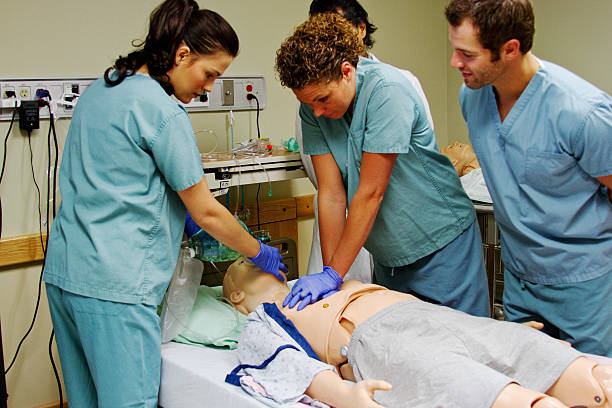
How to Pass the SLO 2 MRCEM OSCE Station: Acutely Unwell and Physiologically Unstable Adult Patients
The MRCEM OSCE exam is designed to test not only knowledge, but the ability to apply structured, safe approaches to critically unwell patients. Within SLO 2, candidates are assessed on their ability to recognise and manage the acutely unwell and physiologically unstable adult. For doctors in emergency medicine training UK, this is a cornerstone skill, as failure to act promptly in these scenarios can have serious consequences.
Understanding the SLO 2 Acute Care Station
The SLO 2 domain is focused on early recognition, assessment, and initial management of acutely unwell adults. In the MRCEM OSCE, stations may involve:
◦ A patient with sepsis or septic shock
◦ Recognition and management of acute airway compromise
◦ A collapsed patient with arrhythmia or hypotension
◦ Early management of acute respiratory distress
◦ Initial resuscitation of a patient in peri-arrest
The examiner is looking for prioritisation, systematic assessment, and clear escalation when required.
Common Challenges
Candidates often lose marks in this domain because of predictable errors:
◦ Failing to apply a structured ABCDE approach under time pressure
◦ Missing critical life-threatening problems while focusing on less urgent issues
◦ Forgetting to verbalise clinical reasoning and management steps
◦ Poor communication with the examiner, patient, or simulated team members
◦ Not escalating early to senior help or critical care support
A Structured Approach
To succeed in this station of the MRCEM OSCE exam, you must demonstrate a safe and repeatable acute care framework.
◦ A – Airway: Assess patency, provide oxygen, consider adjuncts or airway support
◦ B – Breathing: Respiratory rate, oxygen saturations, chest exam; intervene for pneumothorax, asthma, or pulmonary oedema
◦ C – Circulation: Pulse, blood pressure, perfusion; establish IV/IO access, give fluids or vasopressors as indicated
◦ D – Disability: Rapid neurological assessment, GCS, blood glucose
◦ E – Exposure: Identify underlying cause (rash, trauma, bleeding), while preventing hypothermia
Throughout, communicate clearly, escalate early if unstable, and verbalise each action to demonstrate safety.
Communication and Teamworking
Managing unstable patients requires teamwork. In the OSCE, demonstrate leadership by verbalising instructions, asking for help, and using closed-loop communication. Examiners want to see that you are safe, structured, and able to coordinate care under pressure.
Managing Time
The challenge in this station is balancing a full assessment with urgent interventions. Time management is key: stabilise immediately life-threatening problems, then move to secondary details. Always summarise your assessment and proposed management plan to the examiner before the station ends.
Final Thoughts
The SLO 2 acutely unwell adult station in the MRCEM OSCE is a test of your ability to think and act under pressure. Success depends on applying the ABCDE framework, prioritising safety, escalating appropriately, and communicating clearly. With structured preparation and consistent practice, this station becomes an opportunity to showcase confidence and competence.
At Bridge Medical Courses, our examiner-led teaching and simulation scenarios form part of our Emergency medicine training UK, helping candidates refine their frameworks, practise time-critical care, and gain the confidence needed to pass the MRCEM OSCE exam.